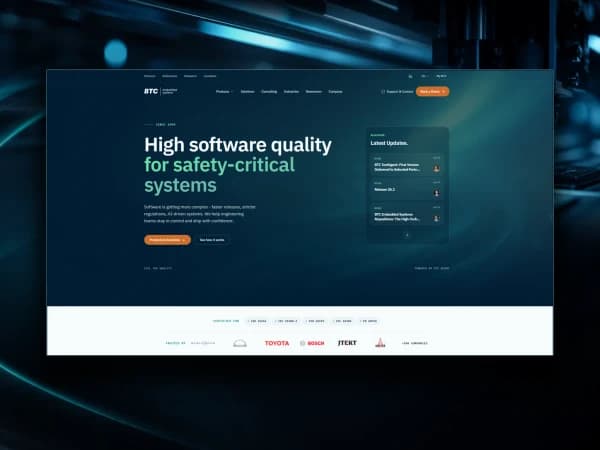
Multilingual Website Agency Berlin
Your Brand.
In Every Language.
We develop multilingual websites that feel native to every market - not like a translated copy of the German original.
International Websites
Translation Is Not Enough.
A company working internationally needs a website that can stand on its own in every market. Different audiences search differently, expect differently and make decisions differently. Copying the German homepage into English misses that point. What works in one market can feel unfamiliar in another - not because of language alone, but because of tone, structure and how content guides the user.
That is why we treat multilingual work as part of project planning. Which content does each market need? How does navigation work when three languages have different content depths? Where is the SEO potential in each language? And how can editorial teams maintain everything day to day without losing control? We answer these questions together - with sensitivity for brand and audience and the technical depth for CMS, structure and search engines.
Portfolio
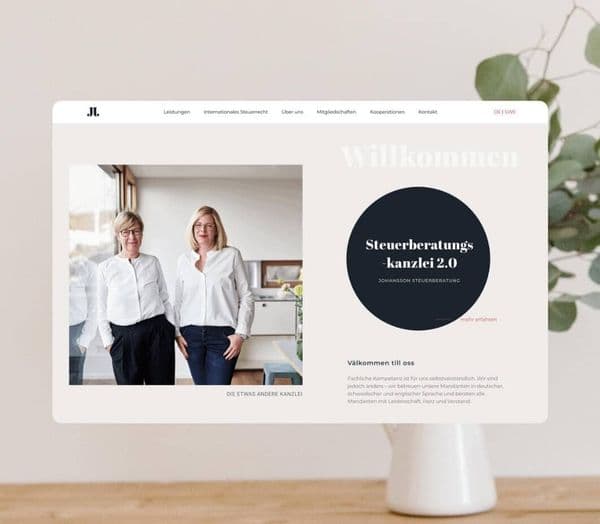
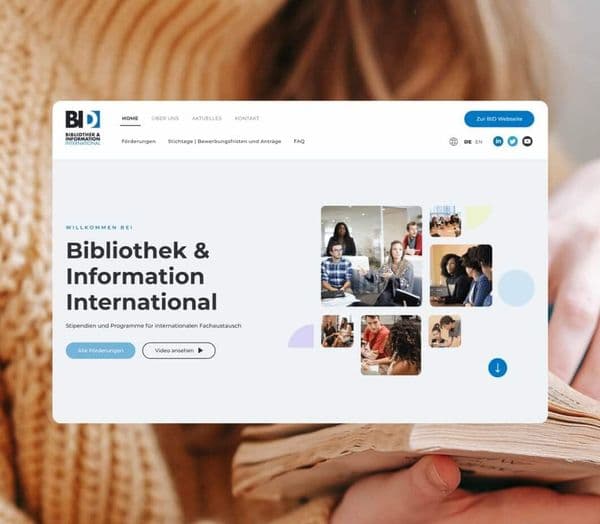
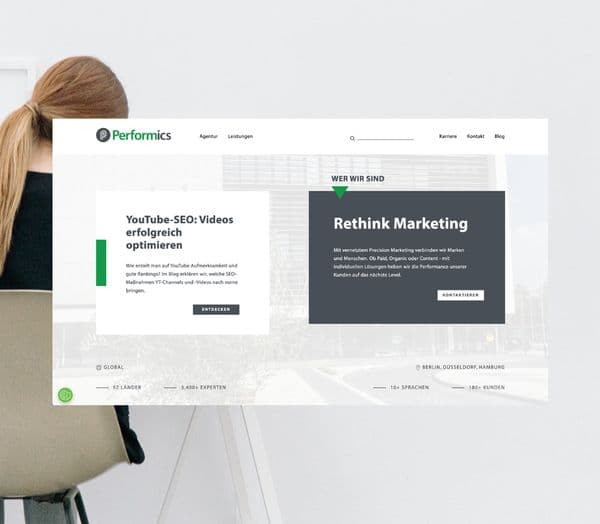
Selected
Multilingual Websites.
Typical Projects
International Websites With Different Starting Points.
The path to a multilingual website looks different for every company. Some start from scratch, some expand, and some need to fix a setup that never really worked.
New Website With Several Languages
New BuildStructureFoundation
For companies that want to be present in several markets from the beginning. Structure, design, CMS and content workflows are planned for multilingual use from day one.
Internationalizing an Existing Website
ExpansionMigrationSEO
The German website exists and now English, French or another version should be added. The key question is what can stay, what needs adaptation and how existing visibility is protected.
Fixing a Failed Multilingual Setup
CorrectionQualityReset
A plugin was installed, texts were translated, but the result does not convince: inconsistent content, difficult maintenance and weak visibility in the second language. Time for a clean reset.
International B2B Communication
Complex services need to be understood across language markets. Specialist communication cannot simply be translated; it needs to be shaped for the market and audience.
Multilingual Commerce
Products, prices, currencies, shipping and legal requirements differ by market. The shop needs to reflect that without making daily maintenance unmanageable.
Relaunch With Internationalization
A relaunch is the right moment to build multilingual structure properly instead of attaching it later to a website that was never designed for it.
What Makes the Difference
How Strong Multilingual Websites Work.
Most multilingual websites do not fail because of translation. They fail because structure, maintenance, SEO, navigation and brand experience were not planned together.
Services
From Language Strategy to a Living Website.
We connect language strategy, content planning, design, CMS setup and SEO into one concept, so multilingual structure works from the beginning instead of becoming an afterthought.
The Right Partner
Why BxW.
Multilingual websites touch everything at once: brand, content, design, CMS, SEO, technology and editorial workflows. That is exactly the kind of project our holistic view is built for.
We Start With the Market, Not the Plugin
Before we set up a language plugin, we understand which markets are addressed, which content is needed there and how the audiences think. Technology follows strategy.
Design, Content and SEO From One Team
Multilingual projects often fail at handovers. With us, design, content planning, SEO strategy and technical implementation come from one team.
CMS Experience Across Systems
WordPress with WPML, Polylang, headless CMS with native i18n: we know the strengths and limitations and recommend the setup that fits the project and editorial team.
SEO Understanding Per Market
Visibility in a second language does not happen automatically. We develop dedicated SEO strategies per market instead of pressing translated keywords into a German page structure.
Experience With International Projects
We have planned and built international company websites, multilingual B2B sites and platforms with complex language structures - and know where the typical friction points are.
Internationalization
Should Your Website Grow Into New Markets?
We review how well your existing website is prepared for additional languages and develop a plan that sets up structure, content and SEO properly from the start.
Discuss InternationalizationRelated Services
What Strengthens Multilingual Websites.
Multilingual websites work best when corporate communication, relaunch planning, CMS and technical quality support each other.
Key Questions
About Multilingual Websites.
What makes a good multilingual website?
It feels like a proper website in every language, not like a translation. That affects content, page structure, SEO, navigation and editorial workflows. A strong multilingual website allows different content depth per language instead of forcing every version into the same template.
Is it enough to translate my website?
Translation can be part of the work for the copy. But multilingual websites also involve page structure, URL architecture, SEO strategy, CMS workflows, metadata and often the design itself. Translation alone creates a second language version, but not necessarily a website that works independently in a new market.
Which CMS does BxW recommend for multilingual websites?
That depends on the project. WordPress with WPML or Polylang works well for many company websites and shops. Headless CMS setups such as Payload offer native multilingual structures with more flexibility in content modeling. We recommend the system that fits the editorial team and requirements.
What matters for SEO on multilingual websites?
Hreflang tags, clean URL structures, language-specific metadata and, most importantly, a dedicated keyword strategy per market. Translated German keywords rarely reflect how people search in another language. Strong multilingual SEO starts with the search intent in each market.
Subdirectory, subdomain or separate domain?
Subdirectories such as /en/ or /fr/ are often the most pragmatic solution because they consolidate domain authority and are easier to maintain. Subdomains or separate domains can make sense when markets are very different or need their own brand presence. We advise based on the business model.
How much work is it to maintain a multilingual website?
That depends on the CMS setup. With a well-planned workflow, editors know which content is synchronized, which content is independent per language and where translation is needed. Poor multilingual setup creates uncertainty and duplicate work; good setup creates orientation and saves time.
Can BxW add languages to an existing website?
In principle, yes - when structure, CMS, content and SEO baseline can be reviewed properly. We clarify what can be reused, what needs adaptation and how the new language is integrated technically and editorially, with special attention to existing content, URLs and visibility.
How does BxW handle translations?
We coordinate the translation process, prepare content in a structured way for translators and check whether the results work in page structure, design and user guidance. The translations themselves are produced by professional translators or native-speaking teams, depending on what fits the project.
How long does a multilingual website project take?
There is no serious one-size answer. It depends on whether a new website is built or an existing one expanded, how many languages are planned, how much content is created per language and how complex the technical foundation is. We plan the process realistically together.
What does a multilingual website cost?
Multilingual structure increases effort in strategy, content, CMS setup and SEO. How much depends on number of languages, content volume per language, translation workflow and technical requirements. We clarify the useful scope before the project starts, so the second language does not become an unmaintainable side structure after launch.
Discuss a Multilingual Website.
Whether new build, expansion or the question why an existing multilingual setup does not work: let us talk about your markets, audiences and the standard for an international website.
Discuss a Project