Companies with growing content
ContentEditorialGrowth
For teams that regularly publish, update and reuse content in different contexts. A considered content model makes editorial work more predictable and grows with the content.
Content
with structure.
We advise on CMS selection, design content models and editorial interfaces, and connect everything to the frontend with a clear view of content, technology and the people who work with it.
When we set up a headless CMS, the project starts with the content model: how content should be structured, maintained and delivered. Only when the model fits the editorial team and the API structure fits the frontend does the system work in daily use. From system selection and content architecture to launch, the goal is that technology and editorial work come together.
We work with Payload CMS, Sanity, Storyblok, Strapi and Contentful, and choose the system that fits the project, not the one that is currently trending. Frontend development with Next.js, Astro or the right framework is part of the same work: content system and presentation from one team, with sensitivity for both sides.
A headless CMS is useful wherever content needs to be structured, flexible and available through an API - for websites, apps, portals or multiple channels at once.
For teams that regularly publish, update and reuse content in different contexts. A considered content model makes editorial work more predictable and grows with the content.
When a relaunch is planned and the existing CMS reaches its limits, switching to a headless CMS is the right moment to rethink content structure, editorial workflows and technology together.
When performance, loading speed and design freedom matter, a headless CMS provides the foundation: the frontend is freely chosen, content comes through an API and the result can be strong technically and visually.
A good CMS makes editorial work easier: clear structures, an editor that fits the team, previews, workflows and the confidence that content arrives where it should.
For content used across websites, apps, newsletters or other channels. A headless CMS manages content centrally and makes it available everywhere through APIs.
When the CMS is part of a larger infrastructure with CRM, PIM, ERP or custom applications, a headless CMS provides the flexibility and API compatibility needed.
The CMS choice alone rarely decides whether the project succeeds. What matters is whether content model, editorial work, frontend and operations fit together.
The content model is the foundation. It determines how content is created, managed and delivered. If it fits the team's way of working, the CMS becomes a tool. If not, the team works against the structure.
Payload, Sanity, Storyblok, Strapi and Contentful all have different strengths. The choice should come from the project: team size, content volume, integrations, hosting requirements and budget. Trends are not a criterion.
The best architecture does not help if the editorial team cannot work with it. A good headless CMS project invests as much attention in the editorial interface as in the technology behind it.
A headless CMS delivers content through an API, but presentation is its own project. When CMS and frontend come from one team, data model, API design and presentation logic align from the beginning.
We keep the throughline from the first assessment through CMS architecture to the point where the team works productively.
Understand requirements, compare systems and make a grounded recommendation. Which headless CMS fits the project, the team and the long-term perspective - with honest assessment and no vendor dependency.
Design the content structure: page types, fields, relationships, reusable blocks and taxonomies. Built so the model fits editorial thinking and is technically clean to implement.
Set up and configure the chosen system, roles, permissions and hosting connection. For open-source systems such as Payload CMS, also on owned infrastructure.
Connect the website or application with the CMS: API integration, preview, image optimization, SEO-relevant output and performance with Next.js, Astro or the right framework.
Set up workflows for publishing, review and translation. Introduce the team to the new CMS in a practical way, with attention to daily editorial work.
Move content from the existing CMS, set up redirects and protect SEO value. After launch: maintenance, updates and further development of content models and features.
We think about headless CMS from the data layer through the content model to the interface. Technology, content and editorial work belong in one project understanding.
We separate headless CMS and frontend in the architecture, but in collaboration they belong together. Data model, API design and presentation logic align from the beginning.
Payload CMS, Sanity, Storyblok, Strapi, Contentful - we know the strengths and limits of different systems from practice and choose what fits the project.
We invest time in content architecture before code is written. A good model makes editorial work productive, content reusable and the system maintainable over time.
Technology matters, but the CMS succeeds or fails on whether editors enjoy working with it. We design interface, workflows and permissions with sensitivity for daily use.
When independence, data control or specific hosting requirements matter, we use open-source systems such as Payload CMS on owned infrastructure and operate them securely and performantly.
Projects where content architecture, CMS competence and frontend development come together.
A headless CMS manages content separately from presentation. Editors work in their own interface, and content is delivered through an API for a website, app, newsletter or several channels at once. The frontend is freely selectable, the architecture is more flexible and the content model follows workflow and content rather than a fixed layout.
That depends on team size, content volume, integrations and technical requirements. Payload CMS offers strong flexibility through open source and owned infrastructure. Sanity has a flexible data model. Storyblok stands out with its visual editor. We recommend the system that fits project, editorial team and operations.
Not generally. A headless CMS offers more structured content, more technical freedom, API-based delivery and strong frontend performance. WordPress has a large plugin ecosystem and a lower entry threshold. We recommend what fits the project, and sometimes that is WordPress.
The content model describes how content is organized inside the CMS: page types, fields, relationships and reusable blocks. A good content model reflects how editorial teams and companies think and work, and strongly affects productivity, reuse and output quality.
Yes. We migrate content, plan redirects, protect SEO value and guide the change so the editorial team can handle the transition. The new system is built and tested in parallel before the switch takes place.
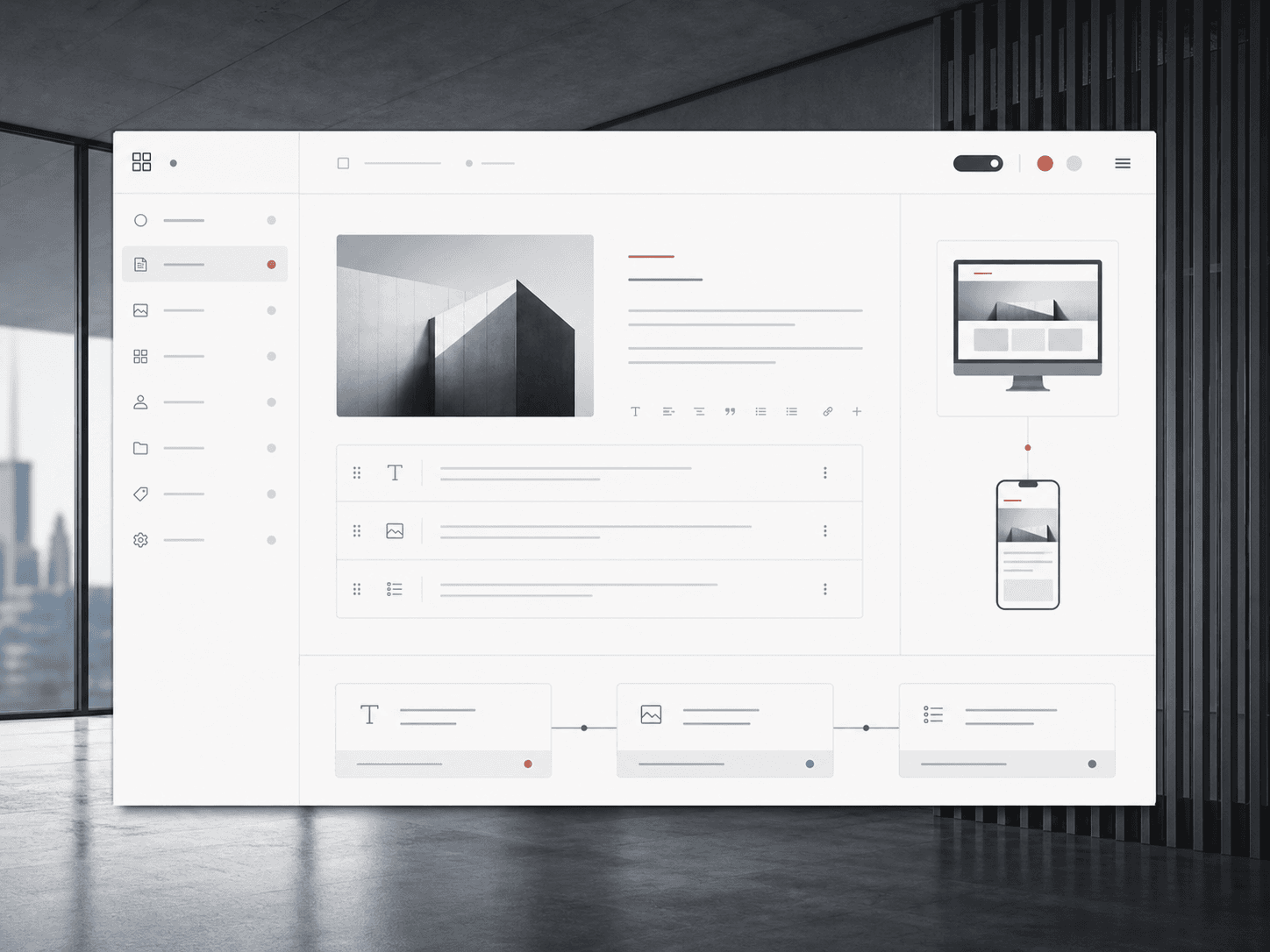
In a dedicated interface with structured fields, preview, review and publishing workflows and clear roles. The editorial interface is its own part of the project, designed with the team's daily work in mind.
Effort depends on content types, integrations, frontend complexity, migration, hosting and training needs. A focused project with few content types and a clear frontend is much more compact than a platform with a complex model and several integrations. We clarify scope before starting.
Yes. We support maintenance, updates, further development of content models and features, monitoring and support. A headless CMS is not a static product; it grows with the requirements of the editorial team and the company.
Which headless CMS fits the project and what the path toward it looks like is best clarified together.
Discuss ProjectBxW Agency
Wir nutzen notwendige Cookies für den Betrieb der Website. Google Analytics laden wir erst, wenn Sie zustimmen.