CRM and ERP Migration
CRMERPSystems
For companies changing CRM, ERP or business systems and needing contacts, pipelines, histories, orders and configurations carried over completely and in the right context.
Data Migration
From Berlin.
We migrate customer records, product data, order histories, CRM contacts, process data and configurations during system changes, platform migrations, legacy replacements and consolidations. With a clear understanding of business logic and dependencies, we make sure data arrives in the new system complete, connected and more useful than before.
Behind every data migration is a company moving forward: a new CRM, a different platform, the replacement of legacy systems or the build-up of a central data foundation. The data that changes place often carries more business meaning than is visible at first glance: customer records, order histories, product catalogs, contracts, process data and the workflows built around them over many years.
Our work starts with understanding that meaning before any data is moved: which processes, reports and teams depend on the data, which relationships and special cases have grown over time and how the target system can make the data more useful in the long run. From there, migration becomes more than transfer. It becomes the moment to improve quality, structure and future use.
We migrate data for companies changing systems, building platforms, consolidating data sets or modernizing structures that have grown over time.
For companies changing CRM, ERP or business systems and needing contacts, pipelines, histories, orders and configurations carried over completely and in the right context.
For projects moving database systems, restructuring schemas or adapting data models to new applications and architectures.
For data in outdated systems, proprietary software, Access files or Excel-based setups that should move into modern, open systems.
For companies replacing SaaS platforms, changing cloud providers, moving to owned infrastructure or regaining control over their data.
For data sets grown across systems and departments that need to be combined into one cleaner, more usable data foundation.
For shop changes and commerce projects where products, variants, prices, customers and order histories need to move cleanly into the new system.
For relaunches and CMS changes where content, media, metadata and URL structures need to move into the new system while protecting rankings.
Data migrations rarely fail because of transfer alone. They fail when understanding is missing, mapping is incomplete, dependencies are overlooked or validation is too weak.
Which data, relationships and special cases exist in the source system? Which processes and teams rely on them? If these questions are skipped, problems appear later in live operation.
Every relevant field, relationship and business rule needs a defined place in the new system. Incomplete mapping creates silent losses that may only become visible weeks later.
Migration is the right moment to remove duplicates, legacy clutter and inconsistent formats. If old issues are imported unchanged, the new system starts with old problems.
Reports, dashboards, automations, pipelines and integrations depend on data. A migration that does not understand these dependencies can interrupt processes in unexpected places.
Before production migration, test runs with real data sets reveal edge cases and make results reviewable. Without test runs, migration becomes a matter of hope.
After transfer, completeness, correctness and relationships are checked in the new system. The migration is finished only when integrations, pipelines and processes run reliably.
We handle analysis, mapping, cleanup, transfer and validation for data migrations with the ambition that data reaches the new system complete, cleaner and more useful than before.
We analyze source systems, data models, field logic, relationships, data quality and dependencies with processes, reports and downstream systems. This creates a complete picture before the migration plan is defined.
We develop mapping logic, transformation rules, cleanup steps, sequence and timeline with clear risk assessment. The plan accounts for dependencies, business continuity and target architecture.
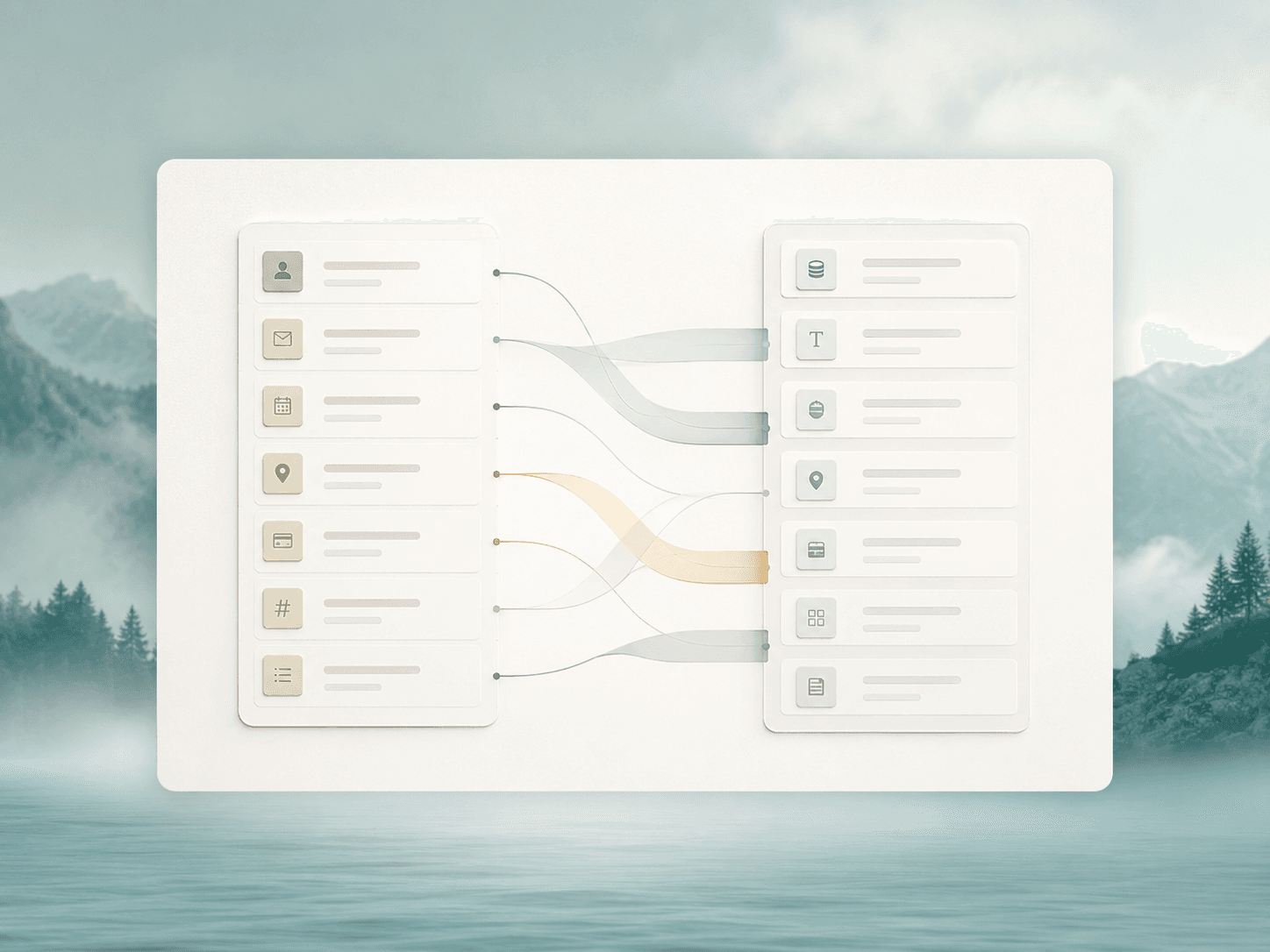
Fields, relationships and special logic are assigned to the new data model. Where structures differ, transformation rules translate, merge or enrich data during migration.
Duplicates, outdated entries, inconsistent formats and legacy clutter are identified and cleaned before transfer. Migration becomes a step forward for the entire data set.
We run the transfer in a controlled way: with test runs on real data, incremental or complete transfers and defined rollback scenarios. Each step is documented and repeatable.
Completeness, correctness and relationships are reviewed in the new system. Integrations, pipelines and processes are tested. Only when operation with real data is stable is the migration complete.
We migrate data with an understanding of the company, its systems and the business logic behind them. Data, web, infrastructure and operations belong together in our work, and that is exactly what we bring into migration projects.
We do not just move fields and tables. We understand customer records, order histories, product logic and process data in their business context. This leads to mapping decisions that work in operation.
We build data platforms, pipelines and data models on PostgreSQL, Supabase, Metabase and other systems. Because we understand target architecture, we prepare data for the next stage, not just the transfer.
CRM, ERP, shops, CMS, databases, APIs and business systems: we know these environments from our own work and understand which data, integrations and logic matter during migration.
Cleanup, deduplication, normalization and structural improvement belong to our standard for migration results. Not as an add-on, but as part of the process.
Test runs, validation on real data and post-migration monitoring are part of the project. A migration is complete only when the new system runs reliably.
We connect data migration with the build-up of modern data platforms, pipelines and automations. When migration and target architecture come from one process, data model, quality and operations fit together from the beginning.
Start a Data Platform ProjectControlled migrations for system changes, platform build-ups and consolidation with care for data models, business logic and quality.
We move customer records, order histories, product data, CRM contacts, process data and configurations from existing systems into new ones in a controlled way. Whether it is a system change, database migration, legacy replacement or consolidation, the goal is that data arrives complete, clean and usable.
CRM, ERP, databases, CMS, shop systems, business apps, SaaS platforms, legacy software and custom data platforms. What matters most is understanding the data and its business meaning, not the name of the system.
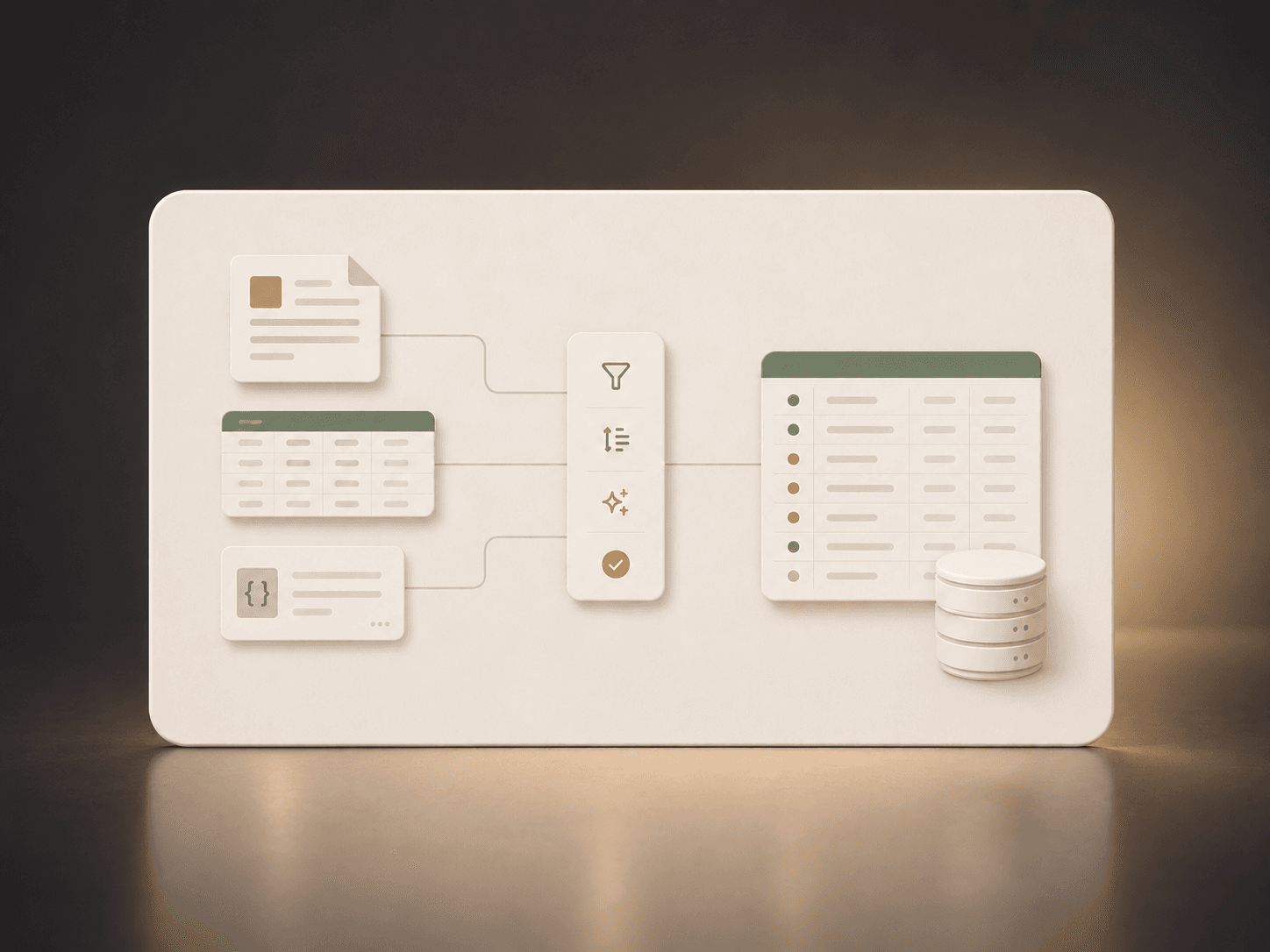
An export copies fields. A good migration understands relationships, business logic and dependencies, cleans quality problems, maps data to the right target structure, validates through test runs and makes sure reports, automations and integrations continue to work.
Migration is the right moment to improve data quality systematically. Duplicates, outdated entries, inconsistent formats and legacy clutter are identified and cleaned before transfer. The new system starts with better data instead of imported problems.
The process usually covers source system analysis, mapping, cleanup, test runs with real data, controlled transfer, validation and follow-up checks. Each step has clear review points. Before production migration, test runs are carried out and results are checked systematically.
Cost depends on data volume, source systems, data quality, mapping, cleanup effort, test runs and validation requirements. A clear transfer from one system is a different project from a migration with several sources, legacy data, process dependencies and ongoing operations. We first clarify what must not be lost under any circumstances.
Legacy data can usually be migrated when access, data structure and target system are clarified. We extract data from outdated software, proprietary databases, Access files, Excel-based setups and systems without APIs; where no export interface exists, we build custom extraction paths.
Timing, sequence and fallback scenarios are planned so ongoing operations are not interrupted. For time-critical migrations, we work with incremental transfers and clearly defined cutover points.
Through systematic mapping, test runs with real data, completeness checks after transfer and post-migration monitoring. Silent losses - data that is missing without being noticed immediately - are addressed through dedicated validation logic.
We build and operate data platforms, pipelines, dashboards and automations. When the migration leads into a system we build or support, data quality and further development stay in one process.
Whether it is a system change, database migration, legacy replacement or consolidation: the best starting point is a conversation about source systems, data sets and what must not be lost during migration.
Start a Migration ProjectBxW Agency
Wir nutzen notwendige Cookies für den Betrieb der Website. Google Analytics laden wir erst, wenn Sie zustimmen.